Rooting in Water
PROPAGATION
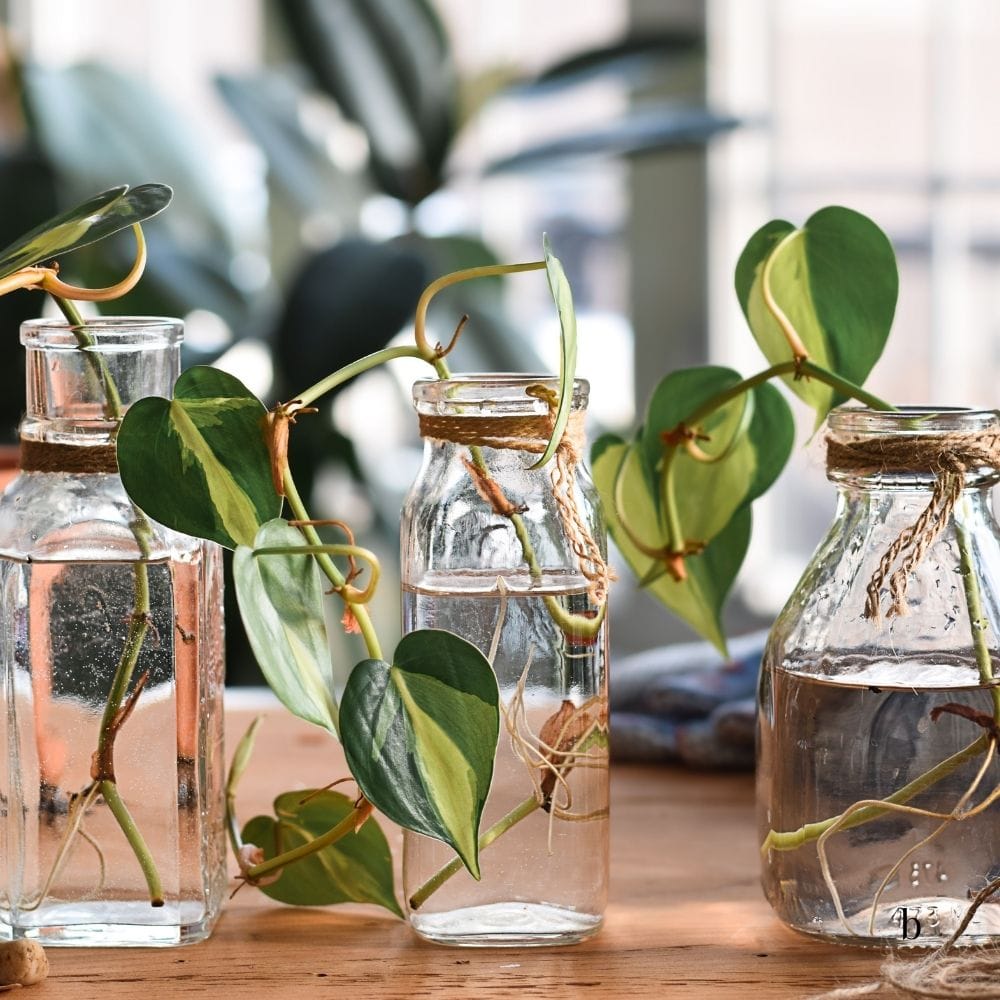
Gardening can be a costly affair, and yet it doesn’t need to be. There are many ways to get your plants for free, and rooting in water is just one of them.
I keep a row of jars on my kitchen windowsill, and there is always something in the rooting process.
Take small cuttings of plants wherever you can. Most people won't mind and there are lots of plants in the wild too. Just don't snip anything in a garden centre - they won’t be happy about it!
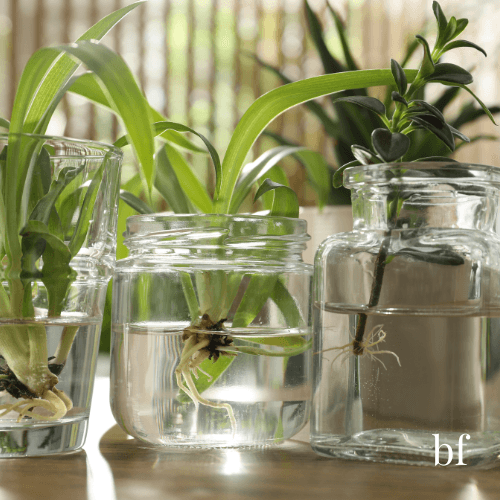
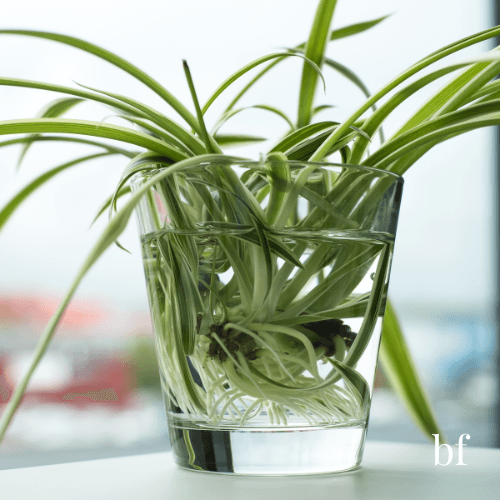
Propagation can become addictive! Once you start propagating (whichever method you use) you may find you have so many plants you have to start giving them away.
I think water propagation is the easiest – all you need is the plant material and a glass of water.
Most plants will grow with this method, some more successfully than others, but as it is free, you can try as many plants as you can find.
The willow tree contains Indolebutyric acid (IBA), which is a hormone that stimulates rooting. They can be found wherever there is water or damp soil.
If you can get a small piece it will speed up rooting immensely. Remove the leaves and cut it into 30cm pieces. Add one to each pot of water. It will root quickly, so watch that the willow roots do not get tangled with your new plant's roots.
Break the willow roots off if they become too large.

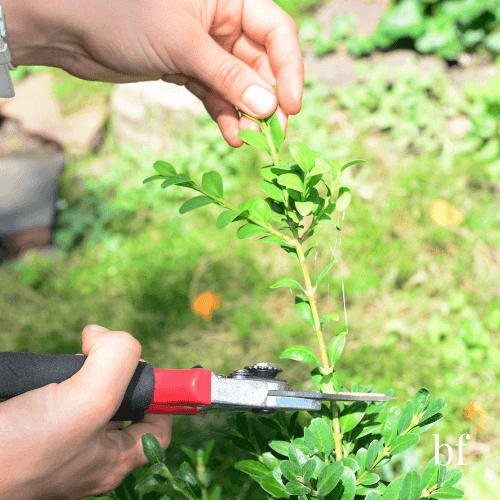
STEM CUTTINGS
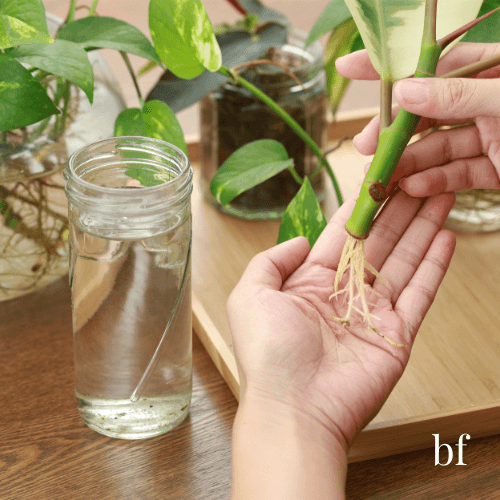
Take a piece of stem roughly 30cm long. Pinch out the top two leaves and remove the leaves from the bottom of the stem. Leaves in water will rot and smell. Place the stem in a glass with roughly 10cm water. Add the willow stem if using. You can put more than one piece per glass. I usually use 3 or 4. Top up the water as it evaporates, and change it if it becomes murky
Depending on the plant, it will take 1 – 4 weeks for the first roots to show. Leave them in the water until they look strong enough to plant.
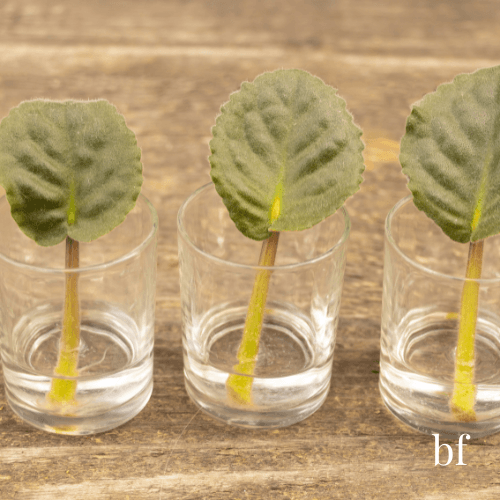
LEAF CUTTINGS
Cut a leaf with the stalk attached and put the stalk into the water. It is sometimes easier to wrap the top of the glass with clingfilm or foil, punch a hole and push the leaf stem into it. This will support the leaf and stop it falling into the water.
Works well for: African violets, fiddle leaf plant, ferns, philodendrons, delicious monster.
VEGETABLE ROOTS
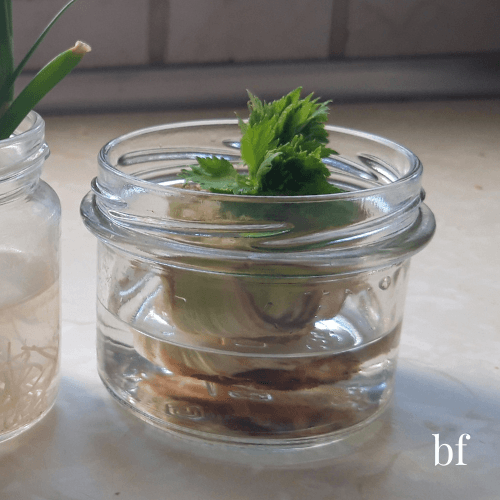
Keep the base of vegetables that you use in the kitchen and grow them again.
Place the vegetable into 5-10cm of water. These root within a few days.
Works well for: Spring onions, celery, watercress, fennel, garlic, lettuce, cabbage. Carrots, beets and turnips will regrow leaves but not new roots.
LARGE SEEDS
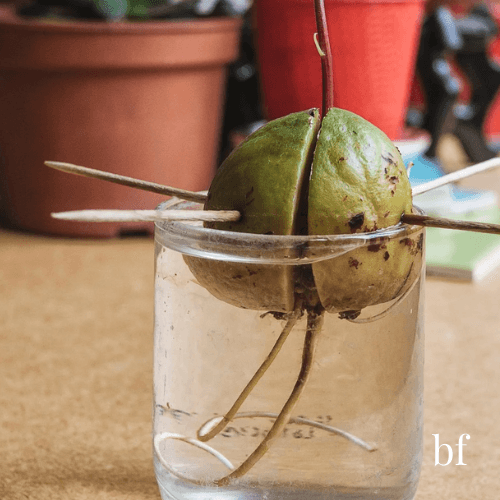
Push toothpicks into 4 sides of the pip. With the help of the toothpicks, balance the seed over a glass, and fill until the water is just touching the bottom of the pip. The roots will form into the water, and a stem will form from the top.
Works well for: Avocado, chou chou, potato, sweet potato, ginger, turmeric
BULBS & RHIZOMES
Hyacinths, daffodils and other bulbs are often sold growing in water and always look beautifully simple in their glass containers or balanced on stones.
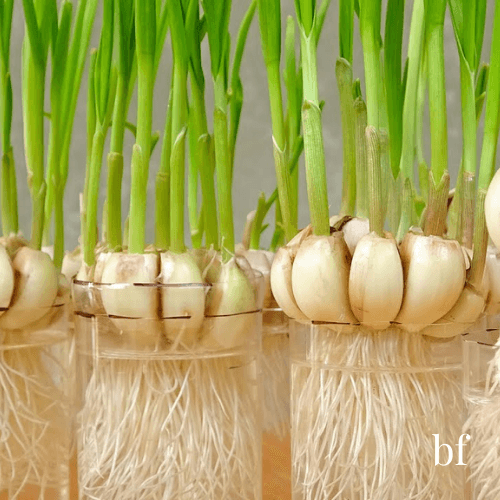
You can do the same with garlic, ginger, turmeric and other bulb or rhizome plants. The water should be just below the base of the bulb.
Works well for: Ginger, turmeric, onions, garlic, leeks, flower bulbs
PLANTING OUT
When the roots are well developed it is time to plant it into a pot or garden.
Make the hole in the soil wide enough to place the root area in without breaking the fragile roots, and then, very gently, add potting soil. If you are planting straight into the garden, use potting soil as it is finer than your garden soil.
As with any young plant, give it extra attention until it has settled. Protect it from extreme heat or cold, and ensure it has enough water
Receive a New Edition every week
Library Categories

"I'm Sharon. I've spent 25 years helping people remember the old ways of healing. (Read More....)


Preserving ancestral plant wisdom for the
Home Healer


